








By Mike Hehner | Angling Edge
There are certain fisheries that really make you appreciate just how fortunate we are as anglers. Lake Superior is one of those places. It’s an incredible body of water, with a tremendous amount of history, an amazing forage base, and some of the finest lake trout fishing opportunities you’ll find anywhere in North America.
What’s particularly interesting about Lake Superior is the story behind the fishery. When you look at where the lake trout population was 60 or 70 years ago compared to what we’re experiencing today, it’s truly a remarkable conservation success story.
And the best part? For anglers living throughout the Upper Midwest, this incredible fishing opportunity might be a whole lot closer than you think.
The Remarkable Comeback of Lake Superior Lake Trout
To really appreciate the lake trout fishing we have today, you need to understand a little bit about what happened to this fishery decades ago.
Back in the 1950s and 1960s, Lake Superior’s native lake trout population was devastated by the invasion of sea lampreys. These parasitic fish attacked lake trout and other species, contributing to a dramatic decline in what had once been an incredibly productive fishery.
It was a serious situation. Lake trout had historically been one of the dominant predators in Lake Superior, but their numbers had fallen to the point where restoring the population became a major conservation priority.
Fortunately, the states and Canadian province surrounding Lake Superior recognized the importance of bringing this fishery back.
Through coordinated restoration efforts, including stocking programs, sea lamprey control, and fisheries management, biologists gradually began rebuilding the lake trout population.
Over time, those efforts paid off.
Today, naturally reproducing lake trout populations have become established across much of Lake Superior. Instead of relying entirely on stocked fish, the lake now supports substantial wild lake trout populations that reproduce successfully.
That’s a pretty amazing accomplishment when you consider how badly the fishery had been damaged.
And there’s another important part of this story that doesn’t always get the attention it deserves.
The lake trout comeback is closely connected to the success of Lake Superior’s forage fish populations.
Lake Herring: The Foundation of a Healthy Fishery
One thing I’ve learned over the years is that when you’re trying to understand why a fishery is successful, you need to pay attention to the forage.
Find out what the fish are eating, where that forage is located, and how those populations are doing.
On Lake Superior, lake herring—also known as cisco—play an incredibly important role in the food chain.
Smelt are present in the lake as well, and they’ve certainly provided forage for lake trout over the years. But lake herring are a particularly important food source for these predators.
What’s interesting is that Lake Superior experienced an exceptionally successful lake herring hatch in recent years. It was one of those remarkable year classes that doesn’t come along very often.
Suddenly, there were tremendous numbers of young herring throughout the system.
And what happens when you have that kind of forage available?
Everything benefits.
Lake trout have access to an abundant food supply, which can improve growth, condition, and overall productivity. A healthy population of forage fish helps support a healthy population of predators.
It’s a relatively simple relationship, but it’s one of the most important things to understand about successful fisheries.
When the forage base is strong, the fishing can be absolutely outstanding.
That’s part of what makes Lake Superior so exciting right now. There’s an impressive population of lake trout, with fish representing a wide range of sizes.
From Fast Action to Trophy Lake Trout
One of the neat things about Lake Superior is that there are several different ways to approach lake trout fishing.
Some anglers are specifically interested in catching the biggest fish possible.
We’ve got friends who travel around Lake Superior targeting giant lake trout. These are ambitious anglers who put in the time to locate and catch fish that most people only dream about.
They’ll fish areas around Isle Royale, the Apostle Islands, Stannard Rock, and other well-known lake trout destinations throughout the Superior basin.
Using modern electronics, particularly forward-facing sonar, they’re able to locate and target individual fish.
And we’re talking about some seriously big lake trout.
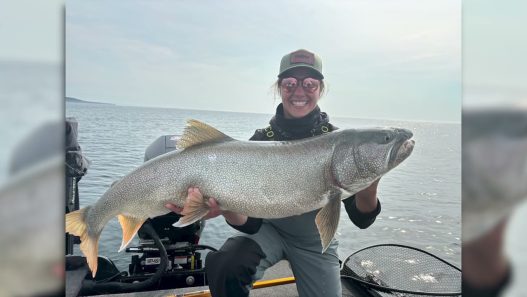
Fish exceeding 40 inches are a realistic trophy target in certain areas of Lake Superior.
Those are incredible fish, and catching one requires dedication, knowledge, and usually a fair amount of patience.
But here’s the other side of the equation.
You don’t have to chase 40-inch lake trout to have an absolutely fantastic day on Lake Superior.
There’s also an abundance of smaller and medium-sized fish, including those hard-fighting three-pounders that provide tremendous action.
When you’re catching lake trout consistently, watching rods load up, clearing lines, and bringing fish to the net, it’s just plain fun.
And when you’re fishing deep water, even a relatively modest lake trout can provide an exciting battle.
That’s what I really enjoy about this fishery. Whether you’re interested in numbers, learning a new technique, or pursuing a true trophy, Lake Superior offers opportunities for all kinds of anglers.
Putting Together a Successful Lake Trout Trolling System
One of the things I enjoy most about fishing is figuring out the system.
It’s not always just about catching fish. It’s about understanding why something works, making adjustments, and eventually putting all the pieces together.
Lake trout trolling is a perfect example.
When we’re fishing Lake Superior, there are several important parts of the presentation that need to work together.
Downriggers: Getting Your Baits Into the Strike Zone
Lake trout often spend considerable time in deep water, particularly during periods when temperature and forage conditions concentrate fish at specific depths.
That’s where downriggers become such an effective tool.
A downrigger allows you to place your lure at a controlled depth and keep it there while trolling.
Instead of guessing how deep a lure is running, you can systematically cover the water column and focus on the depths where you’re marking fish.
Depending on the season and conditions, lake trout might be scattered across several depth ranges or concentrated in a relatively narrow band.
The important thing is being able to adjust your presentation as those conditions change.
Choosing the Right Spoon
Spoons have been catching lake trout for generations, and they remain an excellent trolling presentation.
The key is finding the right combination of size, color, and action for the conditions.
One of the first things I consider is the available forage.
If lake trout are feeding heavily on herring, it makes sense to experiment with spoon profiles and actions that resemble those baitfish.
But you also have to pay attention to how the fish respond.
Sometimes a subtle change in presentation can make a significant difference.
That’s why I like experimenting with different spoons until we start seeing a pattern.
Once you identify something the fish are responding to, you can begin refining the entire trolling program.
Finding the Right Depth
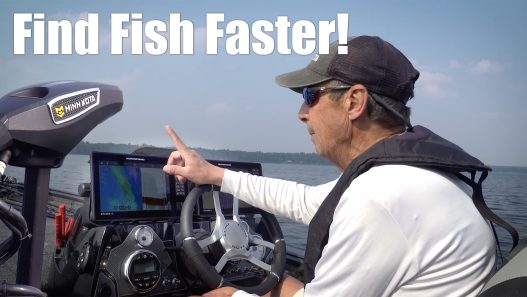
This is where electronics become extremely valuable.
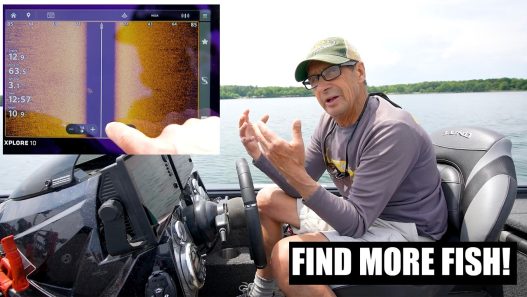
Modern sonar provides an incredible amount of information about what’s happening beneath the boat.
You can identify suspended fish, locate schools of baitfish, and begin determining which portions of the water column deserve the most attention.
But simply marking fish doesn’t automatically mean you’re going to catch them.
You still have to get your lure into the right zone.
That’s why depth control is such an important part of the overall system.
If we’re marking fish at a particular depth, we’ll adjust the downriggers to work that part of the water column.
Then we’ll continue experimenting until we determine which presentation produces the most consistent action.
It’s a process of observation, adjustment, and repetition.
And when everything starts coming together, that’s when lake trout trolling gets really exciting.
The Fun of Fighting Lake Trout From Deep Water
There’s something pretty special about watching a trolling rod load up when you’re fishing deep water.
You know there’s a fish down there, but you’ve got a long way to go before you get your first look at it.
On one of our Lake Superior outings, we were bringing a lake trout up from deep water, watching the line counter slowly work its way toward the surface.
When you’re finally under 100 feet, you start feeling like you’re making progress!
That’s one of the reasons longer trolling rods can be so useful. They help maintain pressure on the fish and provide some forgiveness during the fight.
Meanwhile, everybody in the boat has a job.
Someone is clearing the deck, somebody is getting the net ready, and the angler fighting the fish is concentrating on keeping steady pressure.
As the fish approaches the boat, the excitement builds.
You finally catch a glimpse of it beneath the surface.
And sometimes you realize it’s a little bigger than you originally thought.
That’s when somebody reaches for the bigger net!
There’s nothing quite like sliding a beautiful Lake Superior lake trout into the net after bringing it up from deep water.
Those are the moments that make all the preparation worthwhile.
Seasonal Patterns and Making Adjustments
Another important consideration when fishing Lake Superior is understanding that lake trout locations can change throughout the year.
Water temperature, available forage, seasonal movements, and changing environmental conditions all influence where fish are positioned.
That’s why I don’t believe in approaching every lake trout trip with one fixed presentation.
What worked during a previous outing might not necessarily be the best approach today.
You need to evaluate the conditions, look at what your electronics are showing, and be willing to make adjustments.
Sometimes those changes are relatively minor.
Other times, you might need to rethink the depth you’re fishing or experiment with a completely different spoon.
That’s really what makes fishing interesting.
You’re constantly learning.
Even when you’ve had success on a particular body of water, there’s always something new to figure out.
And on a lake as enormous and complex as Superior, that learning process never really ends.
An Incredible Fishing Opportunity Close to Home
One of the things I appreciate most about Lake Superior is its accessibility to anglers living in Minnesota, Wisconsin, Michigan, and the surrounding region.
Living in central Minnesota, we’re fortunate to have a tremendous variety of fishing opportunities within a reasonable drive.
We have outstanding walleye lakes, excellent bass fishing, incredible muskie fisheries, and countless smaller lakes and rivers.
But having a resource like Lake Superior within reach is something special.
Think about it.
You can leave home, travel to one of the largest freshwater lakes in the world, and have the opportunity to catch lake trout in an environment that’s completely different from the inland lakes we fish so often.
You’re fishing deep, clear water surrounded by spectacular scenery, with the possibility of catching everything from smaller lake trout to true giants.
And on those beautiful days when the lake settles down and the weather cooperates, it’s an experience that’s hard to beat.
Of course, Lake Superior deserves tremendous respect. Weather conditions can change quickly, and its cold water, large waves, and long distances make preparation and proper safety equipment absolutely essential.
But with the right planning, appropriate equipment, and a careful eye on the forecast, it can provide some unforgettable fishing experiences.
Conservation Success Worth Celebrating
When you look at the big picture, the Lake Superior lake trout story is about much more than catching fish.
It’s about what can happen when fisheries managers, researchers, conservation organizations, and anglers work toward a common goal.
Decades ago, the future of Lake Superior’s lake trout population was uncertain.
Today, substantial naturally reproducing populations are supporting recreational fisheries across much of the lake.
That’s a tremendous success.
It also demonstrates just how important healthy ecosystems and strong forage populations are to the future of our fisheries.
The relationship between lake trout and lake herring is a perfect example.
When the food chain is functioning properly, the entire fishery benefits.
And when we take care of these resources, future generations of anglers have the opportunity to enjoy them as well.
Get Out and Experience It
At the end of the day, one of the biggest messages I’d like to share is pretty simple.
Take a look at the fishing opportunities around where you live.
Sometimes we get so focused on fishing the same lakes, chasing the same species, and using the same techniques that we overlook some incredible opportunities relatively close to home.
Lake Superior is a perfect example.
Here’s a fishery that experienced a devastating decline, made an extraordinary comeback, and now offers anglers the opportunity to catch tremendous numbers of lake trout, along with some truly exceptional trophy fish.
For me, a big part of the enjoyment is putting the system together—getting the downriggers set, experimenting with spoons, finding the right depth, and watching everything finally come together.
And then, of course, there’s the reward.
A rod doubles over, somebody grabs the net, and another beautiful Lake Superior lake trout comes aboard.
That’s what makes this kind of fishing so much fun.
We’ve got an incredible resource right here in the Upper Midwest. Get out there, explore it, and take advantage of the opportunities available to you.
Because sometimes the next great fishing adventure is a whole lot closer than you realize.