


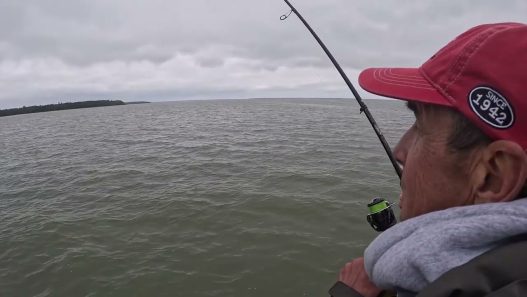



There’s an old saying in fishing that you can’t catch fish where they aren’t. It sounds pretty simple, but when you think about it, that might be one of the most important lessons an angler can learn.
One of the biggest challenges we face on the water, particularly during the summer months, is simply locating fish. You can have the best rods, reels, and presentations in the world, but if you’re fishing unproductive water, you’re wasting valuable time.
That’s where today’s electronics have completely changed the game.
With the combination of detailed mapping, traditional 2D sonar, side imaging, and forward-facing sonar, we have the ability to understand what’s happening beneath the surface better than ever before.
The real secret isn’t necessarily having the most expensive electronics on the market. It’s learning how to use the equipment you already own to its maximum potential.
And believe me, once you understand how these technologies work together, you’ll spend a whole lot less time looking for fish and a whole lot more time catching them.
Start With the Map, Not Your Fishing Rod
One of the things I see anglers do all the time is pull up to a lake, head toward a familiar-looking piece of structure, and immediately start fishing.
Now, there’s nothing wrong with being anxious to make that first cast. We all love to fish!
But I can tell you from years of experience that spending a little time studying your electronics before dropping a line can make an enormous difference in your success.
Let’s say I’m fishing a lake I’m not particularly familiar with. Rather than randomly stopping on points, humps, or weedlines, I’ll spend some time driving around and examining the underwater terrain.
My mapping system is the starting point.
I’m looking for the types of structural elements that naturally concentrate fish—underwater points, sunken humps, steep breaks, and transitions between shallow and deep water.
During the summer, these areas can become particularly important because fish often relate to deeper structures or suspend nearby.
The map tells me where the potential fishing spots are located. But that’s only the beginning.
The next step is determining what actually makes one spot better than another.
Side Imaging: Finding the Spot Within the Spot
Here’s something that’s really important to understand about fishing structure.
Not every part of a hump or underwater point is equally productive.
You might have a large sunken hump that covers several acres, but the majority of the fish could be concentrated around a handful of isolated boulders on one small section of that structure.
That’s why I rely so heavily on side imaging.
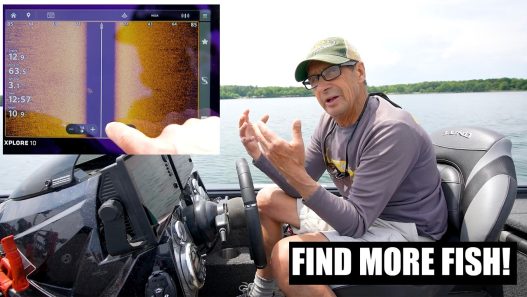
With Humminbird side imaging, I can scan large areas of underwater terrain without having to drive directly over every potential fish-holding location.
For example, when I’m searching a hump, I might set my side imaging to scan 80 feet on each side of the boat.
That gives me a tremendous amount of information in a relatively short amount of time.
As I drive along the edge of the structure, I’m looking for isolated boulders, rock clusters, distinct weed edges, and other irregularities that stand out from the surrounding bottom.
These are the little details that can make a big difference.
Think about it this way: A fish might relate to an entire underwater point, but a particular boulder or rock cluster can provide the exact location where that fish prefers to hold.
And once I identify something interesting, I immediately drop a waypoint.
That waypoint becomes a reference point I can return to later, whether I’m fishing that structure today, tomorrow, or several months down the road.
The more accurately you identify and mark these high-percentage locations, the more efficient your fishing becomes.
Why Isolated Boulders Can Be So Important
Let’s take a closer look at a typical summer fishing situation.
Imagine you’re approaching a sunken hump surrounded by deeper water.
Your mapping system shows the general shape of the structure, but your side imaging reveals something the map can’t tell you: There’s a cluster of large boulders positioned near the tip of the hump.
Now you’ve discovered something worth investigating.
Those boulders create structural diversity. They offer fish a distinct location within a much larger area.
Instead of spending an hour casting across the entire hump, you can concentrate your efforts on the specific locations that appear most promising.
This is one of the biggest advantages of modern electronics.
You’re no longer fishing a general area simply because it looks good on a map. You’re identifying specific targets and developing a plan to fish them efficiently.
And sometimes those targets are surprisingly small.
A single isolated boulder or a subtle change in the weed edge might be the most important feature on an otherwise ordinary-looking piece of structure.
That’s why I always encourage anglers to pay attention to the details.
Combining 2D Sonar, Mapping, and Side Imaging
Another thing I’ve learned over the years is that no single sonar technology tells the entire story.
Each one provides a different piece of information.
Traditional 2D sonar is excellent for monitoring water depth, identifying bottom changes, and detecting fish directly beneath the boat.
Mapping gives you the big picture of the underwater landscape.
Side imaging allows you to search outward from the boat and identify structural features you might otherwise miss.
When you combine all three, you develop a much better understanding of the water you’re fishing.
On my boat, I typically have a few favorite screen configurations that I use when searching for fish.
One of my go-to arrangements combines traditional 2D sonar with mapping, while another display provides side imaging.
This allows me to monitor my position on the structure while simultaneously examining what’s happening beneath and alongside the boat.
It’s an extremely efficient way to search unfamiliar water.
And once I identify something interesting, I can mark it, turn around, and examine it more closely.
MEGA Live: Taking the Search Beyond the Boat
Now, here’s where things get really interesting.
During the middle of summer, fish don’t always stay tight to the bottom or directly on the structure.
As seasonal patterns develop, many fish begin suspending over deeper water or positioning themselves away from the obvious structural elements.
These fish can be difficult to locate using traditional methods because they may be scattered throughout the water column.
That’s where forward-facing sonar, such as Humminbird MEGA Live, becomes an incredibly valuable tool.
<AsyncImage query=”Humminbird MEGA Live forward facing sonar display fish suspended water column fishing boat” aspectRatio=”16:9″/>
With MEGA Live, I can look out in front of the boat and search for fish that aren’t necessarily positioned directly underneath me.
In some situations, I’m scanning nearly 100 feet away from the boat.
Think about what that means.
Instead of having to drive directly over every potential school of fish, I can scan the surrounding water and identify fish at a distance.
That’s a tremendous advantage when you’re searching large areas of open water.
I can look for fish suspended off the edge of a hump, holding near deeper structure, or simply roaming through the water column.
And once I locate them, I have a much better idea of where to position the boat and begin fishing.
Using the One-Boat Network to Your Advantage
One of the things I really appreciate about the Humminbird and Minn Kota One-Boat Network is the flexibility it provides.
On my boat, I can configure different displays to show the information I need, depending on what I’m doing.
For example, I might have an APEX display dedicated to MEGA Live while another unit shows mapping and traditional sonar.
But I’m not limited to one configuration.
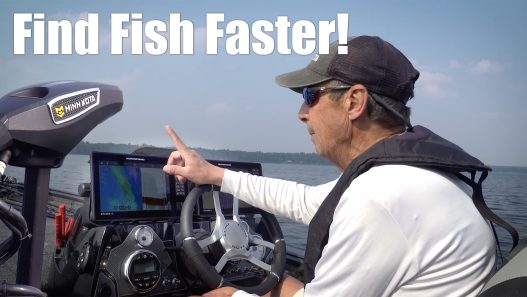
If I want to monitor MEGA Live while operating the boat from the console, I can switch the display and use that information while searching.
I can also control the direction of my compatible Minn Kota trolling motor to pan the sonar back and forth, helping me scan different portions of the water.
This becomes particularly useful when searching for suspended fish.
Instead of staring at one narrow section of water, I can sweep the sonar through an area and look for fish that might be positioned away from the boat.
It’s almost like combing through the water.
And during midsummer, when fish can be scattered across deeper structures and open-water areas, that ability can save an incredible amount of time.
The important thing is understanding how to configure your electronics so they work for the way you fish.
A Simple System for Finding Fish Faster
Over the years, I’ve found that developing a consistent search process makes a big difference, particularly when fishing unfamiliar lakes.
Here’s a practical approach that combines these technologies.
First, identify potential fish-holding structure.
Start with your mapping system and look for underwater points, humps, breaks, and other structural features that fit the seasonal conditions.
Second, examine the structure with side imaging.
Drive around the area and look for isolated boulders, rock clusters, weed edges, and other features that might concentrate fish.
Third, mark the important locations.
Whenever you identify something interesting, drop a waypoint. Don’t rely on remembering exactly where you saw it.
Fourth, use 2D sonar to evaluate what’s directly beneath the boat.
Pay attention to depth changes, bottom characteristics, and fish that may be relating to the structure.
Fifth, expand your search with forward-facing sonar.
If you have MEGA Live or a similar system, scan outward from the boat to look for suspended fish or fish positioned off the structure.
Finally, fish the highest-percentage locations first.
Rather than randomly covering water, use the information you’ve gathered to make deliberate decisions about where to cast.
This approach doesn’t guarantee you’ll catch fish every time you stop. But it can dramatically improve the efficiency of your search.
And in fishing, efficiency matters.
Don’t Let Your Electronics Become Expensive Decorations
Here’s something I really want to emphasize.
You don’t need every piece of modern sonar technology to become a better fisherman.
If all you have is traditional 2D sonar and a good mapping system, you already have tools that can significantly improve your fishing.
If you have side imaging, learn how to interpret the images and identify the features that matter.
If you’re fortunate enough to have forward-facing sonar, spend time understanding how fish appear on the screen and how to use the system to search effectively.
The biggest mistake is investing in electronics and then using only a small percentage of their capabilities.
I’ve seen anglers with incredibly sophisticated equipment who rarely change their screens, adjust their views, or use waypoints to build a better understanding of the water.
And they’re missing out on some tremendous opportunities.
The goal isn’t simply to own the technology.
The goal is to understand what the technology is telling you and turn that information into better fishing decisions.
Spend More Time Finding Fish Before You Start Fishing
One of the greatest lessons I’ve learned throughout my fishing career is that successful anglers don’t necessarily spend more time casting.
They spend more time making good decisions.
They understand seasonal fish movements. They recognize productive structural elements. And they use every available tool to narrow down the search.
Modern electronics have made that process faster and more efficient than ever before.
Whether you’re exploring a new lake, searching for summer walleyes, or looking for suspended fish over deep water, the combination of mapping, sonar, side imaging, and forward-facing technology can help you unlock opportunities you might otherwise overlook.
The next time you head out on the water, resist the temptation to immediately start casting.
Spend a little time driving around.
Study your mapping.
Look closely at the structure.
Mark those isolated boulders and distinctive weed edges.
And if you have forward-facing sonar, use it to explore the water beyond the boat.
You might be surprised by what you discover.
Because at the end of the day, the faster you can find fish, the more time you’ll have to catch them.
And that’s what it’s all about.
Angling Edge — Helping anglers understand fish behavior, master modern fishing technology, and become more successful on the water.