








Here’s the first section of your blog post, written in Jeff Simpson’s Angling Edge style. I’ve structured it with a clear title, headers, and flowing paragraphs that capture both the technical details and the storytelling feel. No conclusion is included, since more transcript parts are coming.
Unlocking the Secrets of Deep Water Fishing
What Does “Deep” Really Mean?
Deep water is a relative term. To a saltwater angler, deep means dropping a line 200 feet down over 700 feet of water. On a dark-water natural lake in the Midwest, “deep” might mean no more than 10 feet. The reality is, depth depends on perspective. For some anglers, 20 feet feels intimidating, but in truth, that’s only the length of a good-sized boat—or just a few strong tail kicks for a fish.
Deep water fishing may seem mysterious at first glance, but once you break it down, the process is far simpler than most believe. It’s not just about how far down the bottom is—it’s also about where the fish position themselves in the water column.
Exploring Cag Lake Lodge in Sunset Country
To put this idea into practice, James and Nick Lindner traveled north to Lundberg’s Cag Lake Lodge, nestled in the heart of Sunset Country, Ontario. Their goal: to dive into the depths for a shot at walleye, northern pike, and the true titans of the lake—giant lake trout.
Instead of focusing on traditional shallow-water basins, James and Nick pushed out into deep ditches and beyond, searching for fish stacked directly beneath the boat. Cag Lake offers an incredible variety, with depths reaching 140 feet, countless islands, reefs, and humps—plenty of structure to cover in a week.
The lodge itself is well-equipped for anglers. With five modern cabins, running water, and the capacity to host up to 40 guests, the operation provides a mix of American and housekeeping plans tailored to any fishing schedule. On top of that, Lundberg’s has been running outpost camps for nearly 60 years, complete with flight service into some of the wildest Canadian waters.
The Forage Factor
As camp manager Steve Clark pointed out during an initial lake tour, one of Cag Lake’s defining features is its abundance of forage. While driving over a prime lake trout hole, the sonar screen lit up—not only with clouds of bait, but also with the unmistakable “big hooks” of predators stacked around them.
It’s the perfect scenario for anglers: when you find the forage, you find the fish. And in this case, that means lake trout cruising the basins, while walleyes and pike position themselves along the edges of deep-water structure.
Efficient Tactics for Vertical Fishing
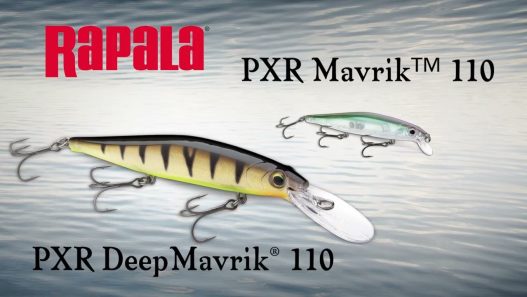
Despite the intimidating depth, catching fish here doesn’t require a boatload of gear. James and Nick leaned heavily on efficient vertical presentations. The Rapala Jigging Rap, especially in bright patterns like Firetiger, proved deadly in deep water. The bait plummets quickly, gets in front of fish fast, and its darting action triggers aggressive strikes.
Soft plastics paired with jigs are equally effective, especially when fish are pinned closer to bottom. But often, the most aggressive trout and walleye suspend higher in the column, making it critical to keep eyes glued to electronics. In this system, sight-fishing with sonar becomes the rule: see the fish, drop to their level, and get bit.
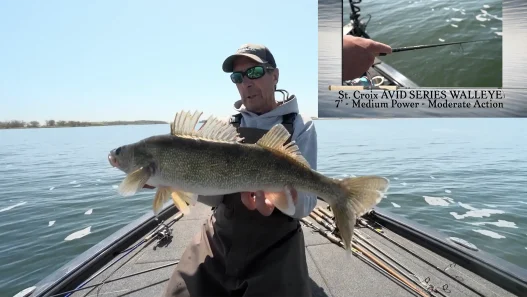
Early in the trip, Nick connected with his first open-water lake trout of the season—a bruiser that thrashed hard on walleye gear. It was a reminder of just how tough these Canadian fish really are. After a spirited fight, the big laker was released back into the depths, glowing with the classic blue-silver sheen that makes the species so admired.
Seasonal Movements and Patterns
Understanding fish movements is essential on a sprawling body of water like Cag, which covers nearly 20,000 acres. According to Steve, the lake’s lower end is characterized by vast shallow flats and spawning points where fish set up earlier in the season. But by mid- to late summer, big migrations occur. Walleyes, pike, and lake trout shift toward the deep-water basins, especially along the west side of the lake where the deepest ditches concentrate forage.
Here, everything comes together: lake trout roaming the basins, walleyes stacking along the breaks, and pike patrolling the edges. By August, the key is targeting depths in the 18–25 foot range, either on structure or suspended over deep water. Classic back-trolling with a jig-and-plastic combo or ripping a Jigging Rap across sonar-marked fish was all it took for James and Nick to stay on a steady bite.
Big Fish, Big Forage
When it comes to trophy-caliber fish—walleyes, pike, and lake trout alike—it all comes back to one thing: forage. The biggest fish in the system are keyed in on deep-water bait. And while it might be tempting to think you need oversized lures to match, often smaller, more precise offerings are the ticket. Soft plastics paired with a Moon Eye Jig remain deadly across depths, able to mimic the baitfish these predators are chasing.
Watching a fat northern or thick-shouldered trout roll into the net is one of fishing’s great rewards. Each fish is a reminder that gear doesn’t need to be complicated to work—just efficient and tuned to the moment. Spinning gear, sharp hooks, and attention to detail are enough to handle some of the toughest customers swimming below.
Electronics: The Game-Changer in Deep Water
On sprawling Canadian lakes like Cag, one tool rises above the rest: sonar. For James and Nick, a portable Humminbird Helix 7 was the MVP of the trip. Cag isn’t mapped with precision, but thanks to built-in basemaps and AutoChart Live, every hour on the water built a clearer picture of the structure below. By day’s end, the unit revealed one-foot contour maps of basins, humps, and ditches that fish used like highways.
Navigation safety is part of the equation too. With scattered islands and sprawling acreage, having coordinates from camp manager Steve Clark proved invaluable. Marking proven trout holes, walleye breaks, and pike zones allowed James and Nick to quickly find productive spots and focus their efforts where fish—and forage—were stacked.
Perhaps the most overlooked tactic with electronics is how you present your bait. Instead of dropping directly onto fish, James often stopped three to five feet above the marks. Forcing fish to rise creates a trigger—when they commit, they strike with far more aggression than when presented head-on.
The Presentation: Less Is More
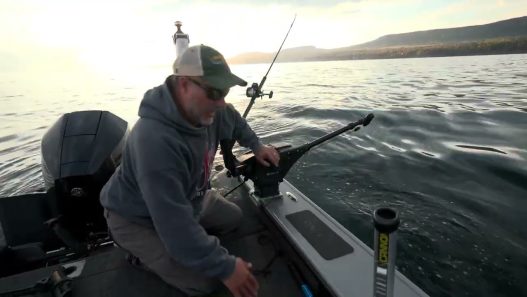
One of the biggest surprises in deep-water fishing is just how little action you need. Unlike aggressive jigging, success often comes from holding a bait relatively still, or with subtle pumps that mimic a struggling baitfish. Whether drifting across a basin or slowly creeping with the trolling motor, the approach is simple: find them on the screen, match their depth, and hold the bait where they can’t ignore it.
This kind of fishing unlocks a true multi-species adventure. Pike, lake trout, and walleye all share these deep-water systems, and switching between targets is as easy as changing bait style or location. The fun is in the mix—bounce around, experiment, and keep exploring. On a lake this size, there’s always something new to discover.
Fishing deep water can seem daunting at first glance, but as James and Nick showed at Lundberg’s Cag Lake Lodge, it’s more approachable than many realize. Armed with a depth finder, a handful of efficient baits, and the willingness to explore, anglers can unlock some of the biggest fish that swim in Canadian waters.

