








There have been a lot of technological advancements in fishing over the last couple of decades. Electronics have become incredibly sophisticated, mapping continues to get better, and trolling motors have evolved into complete boat-control systems.
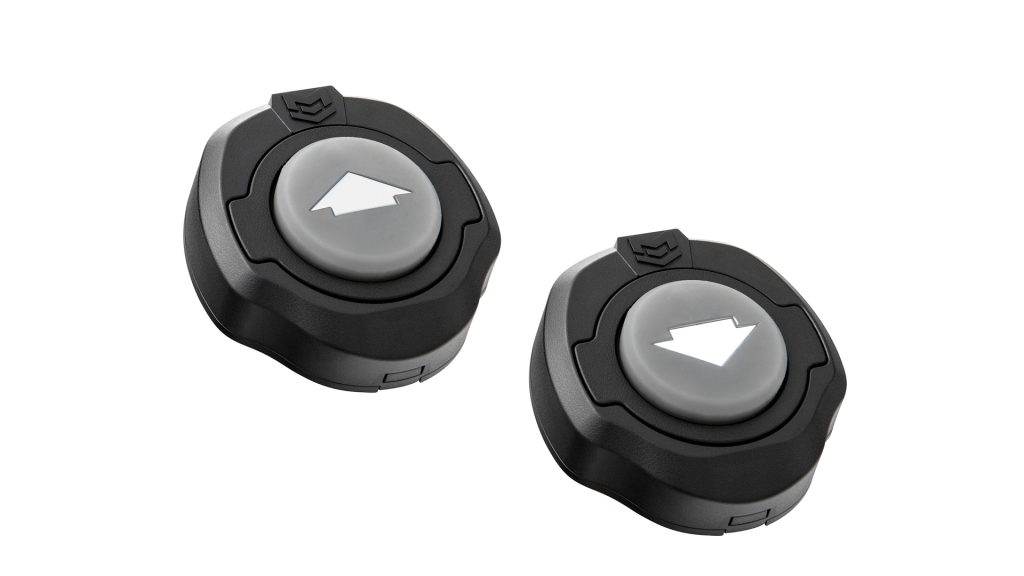
But when you look at the technology that has fundamentally changed how people actually fish, one feature really stands out: Minn Kota Spot-Lock.
When you spend enough time on the water, particularly on popular walleye fisheries, all you have to do is look around. Boat after boat is sitting perfectly in position while anglers fan-cast jigs, jigging minnows, plastics, crankbaits, or whatever presentation happens to be producing.
Years ago, those same anglers would have been drifting, trolling, backtrolling, or constantly working their trolling motors to stay on a piece of structure.
Today, they hit a button.
A Revolution in Boat Control
That sounds simple, but the impact has been enormous.
Before GPS-enabled trolling motors, staying on a specific reef, point, hump, sand transition, or piece of fish-holding structure required constant attention. Wind and waves were continually pushing the boat, and the person running the trolling motor had to constantly compensate.
If you hooked a fish, you could easily get blown off the spot while fighting it. After landing the fish, you’d have to circle back, find the exact location again and reposition the boat.
Spot-Lock changed that entire process.
Find the fish, get the boat where you want it and hit Spot-Lock. The trolling motor takes over the boat-positioning duties while you concentrate on fishing.
That’s a pretty dramatic change.
I actually had an opportunity to work quite a bit with Minn Kota during the early development of this technology. I was involved with some of the R&D work and was one of the first people to have the system on my boat.
At the time, it was something that couldn’t be shown publicly. I couldn’t even use it during tournament competition.
After fishing with it, though, I remember essentially telling the guys at Minn Kota that they’d better get ready, because that one feature was going to be a big deal.
You didn’t have to be a tournament angler to immediately understand the value.
Find the Fish and Stay on Them
The fishing application is incredibly straightforward.
Let’s say you’re working across a reef and suddenly catch a good walleye. Maybe you mark several more fish on your electronics at the same time.
Hit Spot-Lock.
Instead of continuing to drift away from those fish, the trolling motor holds the boat in position.
Now everybody in the boat can cast to that productive area. If somebody hooks another fish, you aren’t worried about running the trolling motor while trying to land it. When that fish gets in the boat, you’re still where you need to be.
That efficiency adds up over the course of a day.
It can be particularly valuable when fish are concentrated on relatively small pieces of structure. Maybe they’re positioned on one corner of a reef, one edge of a point, a small rock pile, or a specific depth transition.
In the past, wind could push you through that productive area pretty quickly. You’d make a pass, catch a fish or two, then have to reposition and make another pass.
Spot-Lock allows you to stop right there and thoroughly work the area.
Spot-Lock Changed Casting Presentations
One of the biggest changes we’ve seen is how much more anglers are casting for species like walleyes.
Look around on a good walleye fishery today and you’ll frequently see anglers Spot-Locked and fan-casting.
Instead of continuously trolling or drifting across an area, they locate the fish, position the boat at the correct casting distance and work those fish from a stationary position.
That works exceptionally well with many of today’s popular presentations.
Jigging minnows are a perfect example. These baits are designed to be cast and worked aggressively around fish. Once you know where the fish are positioned, Spot-Lock allows everybody in the boat to make repeated casts through that productive zone.
The same principle applies to jigs and plastics, hair jigs, jerkbaits and numerous other casting presentations.
Boat control and presentation control go hand in hand.
If you can keep the boat exactly where it needs to be, you can spend more time putting the bait exactly where the fish are.
It’s Not Just About Serious Anglers
The tournament and hardcore fishing applications are obvious, but there’s another side to Spot-Lock that sometimes gets overlooked.
It makes fishing easier for families.
Think about taking two or three youngsters fishing.
Somebody needs help getting their bait on the hook. Another kid has a tangled line. Somebody catches a fish and needs help getting it off. Meanwhile, you’re trying to run the boat and keep everybody positioned over the fish.
That can be a lot to manage.
With Spot-Lock, you can pull up to a reef, point, sand beach or other productive area, engage Spot-Lock and turn your attention to the people in the boat.
You can help bait hooks.
You can untangle lines.
You can take fish off.
Most importantly, you can spend your time fishing with your kids instead of constantly driving the boat.
That’s a tremendous benefit.
Technology sometimes gets discussed only in terms of whether it helps anglers catch more or bigger fish. But some of the best technology simply makes fishing easier and more enjoyable.
Spot-Lock does both.
More Time Fishing, Less Time Repositioning
Efficiency is one of the biggest advantages of modern boat control.
Every minute you spend repositioning a boat is a minute you’re not making a cast.
That might not seem significant until you think about how many times anglers traditionally repositioned during a day of fishing.
Drift through the area.
Fire up the motor.
Move back.
Reset the boat.
Make another drift.
Repeat.
There are situations where drifting and trolling are still absolutely the right techniques, but when the fish are concentrated in one location, Spot-Lock eliminates a tremendous amount of unnecessary movement.
It lets you fish the spot rather than continually relocating the spot.
That’s a big difference.
A Tool for Pros, Weekend Anglers and Everybody Between
One of the things that makes Spot-Lock so significant is that its usefulness isn’t limited to one style of fishing or one level of angler.
Tournament fishermen immediately recognized its value because precise boat positioning can mean the difference between catching fish and missing an opportunity.
Guides benefit because they can concentrate more on their customers.
Weekend anglers benefit because boat control becomes easier.
Families benefit because parents can spend more time helping their children.
And serious recreational anglers benefit because they can dissect structure much more efficiently.
As Alex points out in our conversation, Spot-Lock changed the outlook for “pros and amateurs and everybody in between.”
That’s a pretty good way to describe it.
When You Find Them, Don’t Leave Them
That’s really the beauty of the system.
When you’re searching for fish, you’re using your mapping, electronics and trolling motor together. You’re moving across structure and trying to determine exactly where those fish are positioned.
Then you find them.
Why keep moving?
That’s when you hit Spot-Lock and go to work.
I remember using the early technology and realizing immediately how powerful that concept was. Hook a fish, hit Spot-Lock and the boat stays right there. You aren’t blowing away from the fish while fighting it, and you don’t have to return and reposition after landing it.
That fundamental advantage hasn’t changed.
In the transcript, I called Spot-Lock “the most valuable tool out there” when it comes to overall boat control.
Considering everything that’s happened in fishing technology over the last couple decades, that’s saying something.
The Technology Becomes Part of How You Fish
The sign of truly influential fishing technology is when anglers eventually stop thinking about it as technology.
It simply becomes part of fishing.
That’s where Spot-Lock is today.
You see a boat sitting off a reef and casting? Chances are it’s Spot-Locked.
Someone catches a fish off a small rock pile? Hit Spot-Lock.
You mark a school of walleyes and want everyone casting toward them? Spot-Lock.
You’re taking your kids fishing and want to spend your time helping them rather than running the trolling motor? Spot-Lock.
We’ve seen tremendous advances in electronics, live sonar, mapping and other fishing technologies. Each has changed certain aspects of the sport.
But when you’re talking specifically about boat control, it’s difficult to overstate the impact of Spot-Lock.
You find the fish.
You put the boat where it needs to be.
You hit a button.
And then you fish.
For something that sounds so simple, it has completely changed the game.
For boat control, Spot-Lock is still number one.

