








Especially in Canadian waters, jigging up walleyes is a flexible and successful method for catching walleye. The several tools and approaches applied for effective jigging will be discussed in this paper together with the reasons behind their popularity for walleye targeting.
Jigging Up Walleye Mapped with Sonar
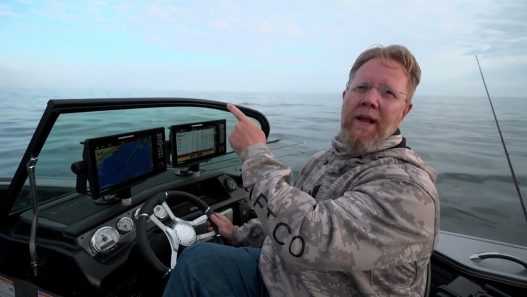
Regarding jigging for walleye, the correct tools are absolutely vital. A 2D sonar is one of the most crucial instruments since it lets anglers view what is exactly under their boat. The 2D sonar aids in fish identification in the surroundings and offers a clear image of the underwater construction. It is particularly helpful for finding fish shelter in rocks or other constructions.
Down imaging for better views
Apart from the 2D sonar, down imaging technologies also find use. Down imaging clarifies any shadows or unclear images on the 2D sonar. It offers a more thorough perspective of the bottom structure and aids in the composition of the bottom—that is, whether round rock points or flat rocks become sand. This technology makes it simpler to find possible fishing locations since it provides anglers with a perfect view of what lies under the surface.
Precision Fishing Using Spot Lock Feature for Walleye Jigging Up
The spot lock feature of trolling motor technology is among its most amazing developments. Anglers can precisely anchor their boat in a designated spot with Spot-Lock simply with a button. This relieves the need to constantly change the boat’s position in windy conditions, so freeing anglers to concentrate on fishing instead of weather. The spot lock function has transformed fishing, enabling better management of profitable fishing areas and catch of fish following other fish.
Versatility of Jigging for Walleye
One very flexible method for catching walleye in a range of conditions is jigging. Jigging can be quite successful whether your fishing in shallow or deep water. Given walleye are known to suspend at different depths depending on the conditions, it lets anglers present their bait at different depths in the water column.
The Jig: The Most Powerful Tool
Regarding jigging for walleye, an angler’s tackle box’s most flexible and usually most successful tool is the jig. Usually with some enhancements, a round ball jig is used for walleye fishing. Featuring a high carbon steel hook, painted eyes, and a molded keeper, the VMC Hardball Jig is one often used choice. Right out of the box, the clean hook ties make use simple.
Comparatively using artificial and live bait
Although jigging works well with both artificial and live bait, the decision relies on the mood of the fish. Sometimes, such as when the fish are aggressive, soft plastic baits can be quite successful. They are fished without continual rebaiting and offer a reasonable profile. Super gluing the soft plastic baits onto the jig will help to guarantee their longevity and position.
Conversely, the secret to success when the fish are finicky is often using live bait. On their jigs, anglers can attract walleye to bite using live minnows. This can cause a frenzy of bites whereby one fish after another is caught.
Selecting Correct Jig Size and Weight
The scenario will affect the weight and size of the jig used for walleye fishing. A 3/8 ounce jig is commonly used to present more aggressively when fishing with soft plastic baits. This lets fishermen entice the walleye to strike by working the bait more forcefully.
Usually, one wants a quarter ounce jig when using live bait. When fishing in shallower water or when the fish are more cautious, this lighter weight lets you present with more grace.
Choosing the Correct fishing line
Jigging for walleye requires careful selection of a fishing line. Many fishermen choose a braid mainline including a fluorocarbon leader. Strength and sensitivity from the braid mainline let anglers feel even the smallest nibble. Popular for braid, Sufix 832 is highly visible and durable—qualities that are particularly helpful for bite detection.
Sufix also provides a premium braid known as Sufix 131, which is quite silky, quiet, and manages rather well. For jig fishing, this braid offers an unparalleled fishing experience. It changes everything. Anglers are waiting impatiently for its release in high visibility colors, even though it is just available in low visibility colors right now.
Popular choice for the leader is Sufix Advanced Fluorocarbon Leader Material in 12-pound test. This thicker line enables one to resist the abrasion from the sharp teeth of the walleye and their sometimes rocky habitat. It also lets fishermen raise bigger fish into the boat without frequently re-tying.
Selecting Correct Rod and Reel
Effective jigging depends on correct rod and reel configuration. Regarding jigging for walleye, a snap jigging rod is really advised. One often used choice is the St. Croix Legend Tournament Walleye Rod in a 6’8″ medium extra-fast action. For snap jigging and other jigging processes, this rod offers the ideal mix of length, leverage, and quick response required.
Regarding reels, Daiwa presents a selection of choices fit for jig fishing. For their speed and line management qualities, reels in the 2500 range—such as the Daiwa Revros or the Kage LT MQ—are favored. Faster line retrieval made possible by the larger spool facilitates easier reeling in of fish. Furthermore much appreciated for their dependability and smoothness are the drag systems on Daiwa reels.
The Joy of Jigging for Walleye
Jigging for walleye can give a thrilling fishing trip. Anglers find it a popular method because of the continuous action and chance to catch quality fish. Jigging is a method that can produce amazing results whether your fishing in Ontario’s immaculate Sunset Country waters or elsewhere at walleye hotspots.

