








One of the questions I hear all the time from anglers who are getting into lake trout fishing is, “What rod and reel should I be using?”
The truth is, there isn’t just one perfect setup.
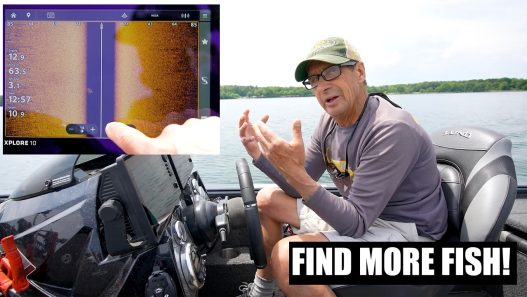
Lake trout are incredibly versatile fish. Depending on the season, the depth, and the presentation, you might be casting, jigging, trolling, or even fishing vertically over fish you’re watching on live sonar. Here, Mike Hehner talks about the different rod and reel combinations he relies on throughout the season.
As Mike explains, having a few specialized outfits makes you a much more effective lake trout angler.
The Everyday Jigging Setup
If Mike could only bring one outfit lake trout fishing, it would be a medium-heavy spinning rod.
“This is the workhorse,” Mike explains. “It’s powerful enough to handle big fish, but it still has enough tip to work a jig properly.”
Whether he’s fishing heavy jigging spoons, soft plastics, or large swimbaits in 40 to 100 feet of water, this setup offers the perfect balance of sensitivity and lifting power.
Pair the rod with a quality 3000- to 4000-size spinning reel spooled with braided line, and you’ve got a setup capable of handling everything from eater-sized trout to true giants.
The no-stretch braid makes it easy to detect subtle bites in deep water while delivering solid hooksets even when fishing vertically beneath the boat.
Medium-Power Spinning Rods for Smaller Presentations
There are days when lake trout become surprisingly finicky.
Instead of pounding aggressive presentations, Mike often downsizes to smaller tubes, lighter jig heads, or finesse-style plastics.
That’s when a medium-power spinning rod shines.
The softer action allows anglers to cast lighter baits farther while providing enough sensitivity to feel every rock, every tick, and every subtle bite.
It’s also an outstanding setup for anglers fishing clear-water lakes where trout are feeding on smaller forage.
Heavy Rods for Big Tubes and Oversized Plastics
When targeting trophy trout, Mike isn’t afraid to throw big baits.
Large tubes, oversized swimbaits, and heavy jig heads require considerably more backbone than traditional walleye tackle.
A heavy-power spinning rod gives anglers the ability to move those larger baits aggressively while maintaining complete control over fish that routinely exceed twenty pounds.
“When a giant lake trout decides to head back toward bottom,” Mike says, “you need a rod with some authority.”
The additional power also helps anglers maintain control during long battles in deep water.
Trolling Rods for Covering Water
Although jigging gets much of the attention today, trolling remains one of the most efficient ways to locate active lake trout, especially on large Canadian shield lakes.
For trolling, Mike prefers longer rods that absorb violent strikes while keeping constant pressure on fish.
Longer rods also help spread multiple lines behind the boat and reduce tangles when running planer boards or multiple presentations.
Matched with line-counter reels, these setups allow anglers to duplicate productive depths with incredible precision.
Knowing exactly how much line is behind the boat often makes the difference between catching one trout and catching them consistently.
Baitcasting Setups Have Their Place
Many anglers automatically reach for spinning gear, but Mike says baitcasting equipment has become increasingly popular for certain presentations.
When fishing heavier lures repeatedly throughout the day, a low-profile baitcaster reduces fatigue and provides exceptional casting accuracy.
Baitcasters also excel when working larger glide baits, heavy swimbaits, or oversized lipless lures for aggressive trout.
The increased cranking power becomes noticeable after hundreds of casts.
Reel Size Matters
One mistake Mike sees frequently is anglers using reels that are simply too small.
Lake trout spend much of their lives in deep water.
That means every hookset is followed by a long battle from significant depths.
Larger spinning reels retrieve more line with every turn of the handle while offering smoother drag systems and greater line capacity.
That translates into better fish control and less fatigue throughout the day.
“It’s not just about fighting fish,” Mike explains. “It’s about efficiency. Every time you drop your bait sixty or eighty feet, a larger reel gets you back in the strike zone faster.”
Braided Line Is Hard to Beat
Regardless of the rod choice, Mike strongly prefers braided line for nearly all lake trout presentations.
The sensitivity is unmatched.
Whether you’re bouncing a jig across rocks, dragging plastics through boulders, or fishing vertically over suspended trout, braid instantly communicates what’s happening at the lure.
Mike typically finishes the setup with a fluorocarbon leader to provide abrasion resistance around sharp rocks while maintaining a stealthier presentation in crystal-clear water.
Build Your Arsenal Over Time
One of Mike’s biggest pieces of advice is not feeling like you need every rod immediately.
Start with a versatile medium-heavy spinning outfit.
As you fish more and discover the techniques you enjoy most, add specialized equipment that matches your style.
Eventually, you’ll have dedicated setups for vertical jigging, finesse presentations, heavy plastics, casting reaction baits, and trolling.
Each outfit makes you more efficient and ultimately helps you spend more time fighting fish instead of changing tackle.
Lake trout are among the most exciting freshwater fish to target, and having the right equipment makes the experience even more enjoyable.
As Mike Hehner emphasizes, there isn’t one perfect rod and reel combination. Instead, successful anglers build a collection of outfits designed for specific techniques and conditions.
Whether you’re dropping heavy jigs into deep structure, casting swimbaits along rocky points, or trolling vast expanses of open water, choosing the proper rod and reel allows every presentation to perform exactly as intended.
Invest in quality equipment, match your setup to your technique, and you’ll spend more time connected to one of freshwater’s hardest-fighting gamefish.

