


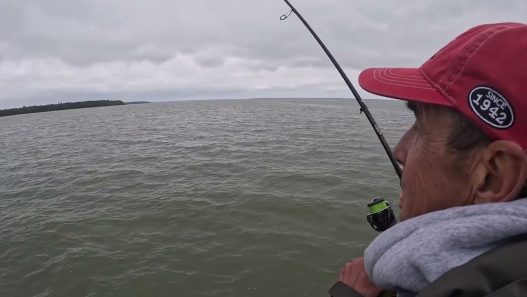

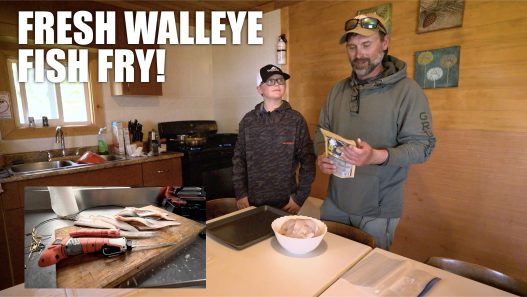






One of my favorite things about fishing in Ontario isn’t necessarily catching a specific species or even catching the biggest fish in the lake.
It’s exploring new water.
There’s something pretty special about launching the boat in a place you’ve never fished before, looking at a map and wondering what might be swimming underneath you. Maybe you find a great walleye spot. Maybe you stumble into a bunch of big northern pike. Maybe you start seeing smallmouth bass. Or, if everything works out just right, you might even end up chasing lake trout.
That’s exactly what makes fishing Ontario’s Sunset Country so much fun.
On this particular adventure, we had an opportunity to spend some time with lodge owner and operator Ian, who knows this massive system incredibly well. Instead of heading straight for the obvious spots and doing what we already knew would work, we decided to explore.
And that’s when fishing really gets interesting.
A Massive System Loaded With Fish
The first thing that strikes you when you start looking at this country is simply how much water there is.
The system Ian operates on consists of Five Lakes, including Gull Rock and Red Lake, with all of them accessible from camp. That creates an enormous amount of fishing opportunity without having to travel to an entirely different destination.
You can spend your morning fishing one type of structure for walleyes and northern pike and potentially finish your afternoon somewhere completely different chasing lake trout.
And the quality of the fishery is impressive.
There are plenty of walleyes throughout the system, and the size structure continues to get better. Fish in the 26- to 27-inch range are certainly available, with legitimate opportunities at walleyes approaching that magical 30-inch mark.
Then there are the northern pike.
The northern population is extremely healthy, and your chances of encountering a fish around 40 inches are very good. In some portions of this massive system, there are also legitimate opportunities for those giant 40- to 45-inch class pike.
Add smallmouth bass and a recovering lake trout population into the equation, and suddenly you’ve got a fishery where you never really know what the next stop might produce.
That’s my kind of fishing.
Big Water Produces Big Fish
One thing we’ve noticed over the years is that these enormous Canadian fisheries tend to have incredible size structures.
There’s just so much habitat.
Deep water, shallow water, rocky shorelines, points, reefs, islands, current areas and seemingly endless amounts of structure give fish everything they need.
On the Gull Rock chain, for example, you’ve got the potential for some truly impressive northern pike along with big walleyes. We’re talking about walleyes in that four-, six- and even eight-pound range.
Those are the kinds of fish that keep you coming back.
But smaller lakes have something different to offer.
You might not always have the same overall size structure that you find in the giant bodies of water, but some of these smaller lakes can provide fantastic action. The fish are often beautifully colored, aggressive and relatively easy to catch.
And sometimes that’s exactly what you’re looking for.
Instead of measuring the success of a trip by one giant fish, you can spend a day bouncing around, catching different species and learning completely new water.
Don’t Be Afraid to Leave the Familiar Water
I had been up here a couple of years earlier and talked with Ian about some of the alternative fishing opportunities available in the area.
His response was basically, “We’ll go show you.”
That’s exactly what we did.
We expanded our range and moved away from the Gull Rock chain to explore water we hadn’t fished before.
There’s always a temptation when you’re fishing a great destination to stay where you already know the fish are.
I understand it.
When you know there are big walleyes and giant northern pike swimming in an area, it’s pretty difficult to drive away from them.
But you also don’t learn much new by fishing the same spots every trip.
Exploration forces you to start putting the puzzle together again.
You begin studying the map.
You look at the structure.
You watch your electronics.
You start asking yourself why a fish should be sitting on a particular point, reef, shoreline or piece of structure.
Then you drop a bait down and find out whether you’re right.
That process is a huge part of what makes fishing fun.
Five Minutes to a Lake Trout
One of the alternate opportunities Ian mentioned was lake trout.
So eventually we found ourselves over on Red Lake hunting for them.
Ian told us we could catch a laker.
About five minutes later, we had one.
Pretty tough to argue with the lodge owner after that!
That’s another reason it pays to spend time with people who really understand these fisheries. Local knowledge can dramatically shorten the learning curve, especially when you’re exploring an enormous system.
You can look at a map and make educated guesses all day long, but someone who has spent years on that water understands the seasonal movements, productive areas and subtle differences between lakes.
Ian knew where those trout lived.
We simply had to go find them.
And when you can go from catching walleyes and northern pike to boating a lake trout within the same overall system, you begin to realize just how diverse these Northwest Ontario fisheries really are.
Come Prepared to Catch Everything
One thing we like to do on trips like this is bring a lot of different equipment.
Instead of deciding before the trip that we’re only going to fish walleyes, we come prepared for whatever opportunities present themselves.
That means bringing different rods, reels and lure combinations that allow us to quickly change presentations and species.
If we find walleyes, we’ll fish walleyes.
If we start seeing smallmouth bass, we’ll chase smallmouth.
If somebody tells us there are giant northern pike around the corner, we’re probably going to investigate.
And if Ian says we can catch lake trout, we’re definitely going to give that a try too.
That’s the beauty of multi-species fishing.
You’re constantly experimenting with different lures, rods, reels and techniques while learning how fish relate to different types of water.
It makes you a better angler.
More importantly, it’s just a lot of fun.
The Sunset Country Slam
When you start listing the species available in this part of Northwest Ontario, you can almost create your own version of a fishing Grand Slam.
Walleyes.
Northern pike.
Lake trout.
Smallmouth bass.
And depending on where you’re fishing, muskies can enter the picture as well.
Call it the Sunset Country Slam.
The goal doesn’t necessarily have to be catching the biggest fish of every species. The fun is seeing how many different opportunities you can experience during one trip.
That might mean jigging walleyes in the morning, throwing baits for pike during the afternoon and finishing the day chasing lake trout.
Tomorrow could be completely different.
That’s what keeps these trips interesting.
Exploration Is Half the Adventure
On the drive north, we talked about how exploration has become one of our favorite parts of fishing.
Catching fish is obviously important.
But there’s something incredibly rewarding about expanding the amount of water you understand.
Every time you fish a new bay, lake, reef or section of shoreline, you’re adding another piece to your mental map.
Some places don’t work.
Others produce immediately.
And every once in a while, you find one of those spots that makes you wonder why you didn’t try it years ago.
That’s the addictive part.
You keep expanding.
You keep looking.
You keep finding new water.
And in a place like Ontario’s Sunset Country, you could probably spend a lifetime doing exactly that and never come close to seeing everything.
So the next time you head north, don’t be afraid to bring a few extra rods and leave your normal milk run for a day.
Pick a lake you’ve never fished.
Turn down a shoreline you’ve never explored.
Try a different species.
Ask the lodge owner about something most visiting anglers overlook.
You might catch a giant walleye.
You might run into a 40-inch northern.
You might discover a fantastic smallmouth fishery.
Or somebody might tell you there’s a lake trout nearby—and five minutes later, you’ll be holding one.
Sometimes the best part of a fishing trip is simply finding out what’s around the next corner.

