




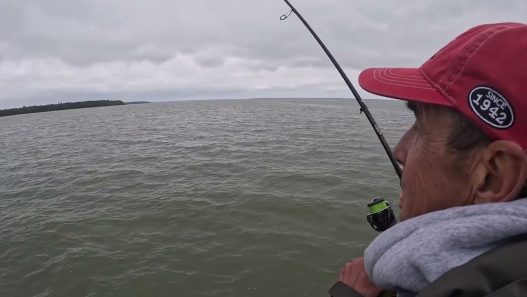




There are few things in fishing more exciting than watching a big smallmouth bass explode on a topwater bait. When you get those hot, muggy summer days up in Canada, that’s one of the first things that comes to my mind: topwater smallmouth fishing.
Over the years, we’ve spent a lot of time chasing smallmouth throughout Canada, and when the conditions line up, topwater fishing can be absolutely incredible. But there’s something important to understand—you don’t want to head out there with just one topwater bait.
There are four different styles of topwaters I like to have in the boat:
They all make noise and disturbance on the surface, but they don’t do it the same way. Each bait has its own personality, and there are times when the fish clearly prefer one over another.
From our experience doing this for a lot of years, I would rank them in that order for day-in, day-out productivity. The popper is number one, followed by the prop bait, walking bait and finally the tail bait.
But don’t overlook any of them. There are days when changing the sound, action or cadence of your topwater can be exactly what it takes to trigger the better fish.
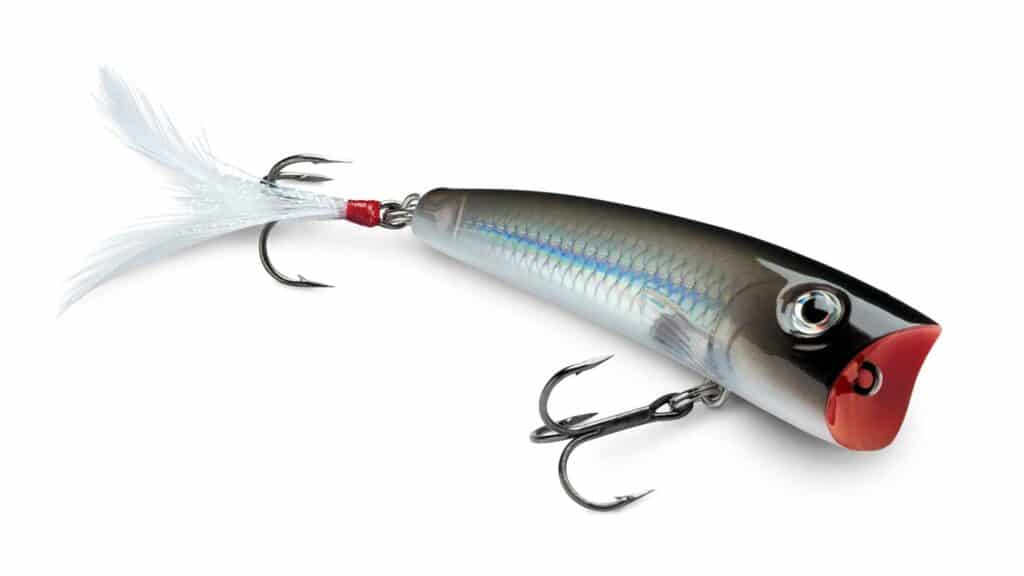
1. The Popper: My Number-One Choice
If I had to pick one topwater bait for Canadian smallmouth, the popper would be my first choice.
There is something about that popping, spitting action that smallmouth just can’t seem to leave alone. But one of the biggest keys to fishing a popper effectively isn’t necessarily how hard you work it.
It’s the pause.
A lot of anglers have a tendency to overwork topwater baits. They cast them out and immediately start popping, twitching and moving the bait all the way back to the boat.
Sometimes that works. Other times, the fish want that bait sitting almost motionless.
You might pop it a couple of times and let it sit. Then pop it again and let it sit a little longer. That pause can make all the difference in the world.
That’s why you need to experiment.
Don’t get locked into one retrieve. Change how hard you pop the bait. Change the number of pops between pauses. Most importantly, change how long you let the bait sit.
The fish will usually tell you what they want.
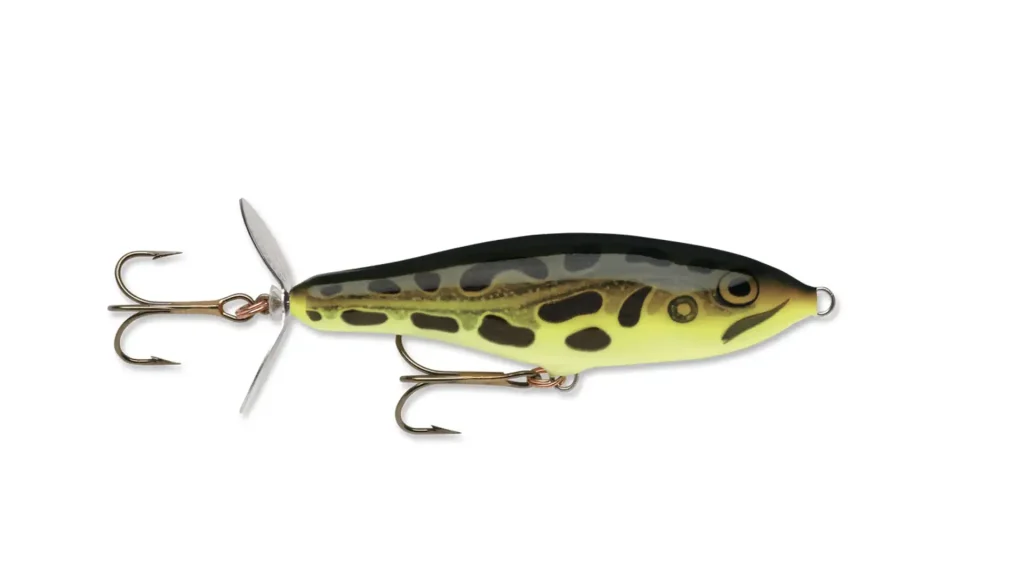
2. The Prop Bait: A Different Kind of Disturbance
Number two on my list is the prop bait.
A prop bait produces a completely different surface disturbance than a popper. Instead of that sharp popping sound, the prop creates commotion and vibration as it moves across the surface.
That can be an incredibly effective trigger for smallmouth.
Just like the popper, though, cadence matters.
You can work a prop bait aggressively, or you can move it a short distance and let it sit. Sometimes those fish want a bait making quite a bit of noise. Other times, that short burst of activity followed by a long pause is what gets them.
That’s why carrying different styles of topwaters is so important. You’re not simply changing the shape of the lure—you’re changing the sound, vibration and action the fish are seeing and feeling.
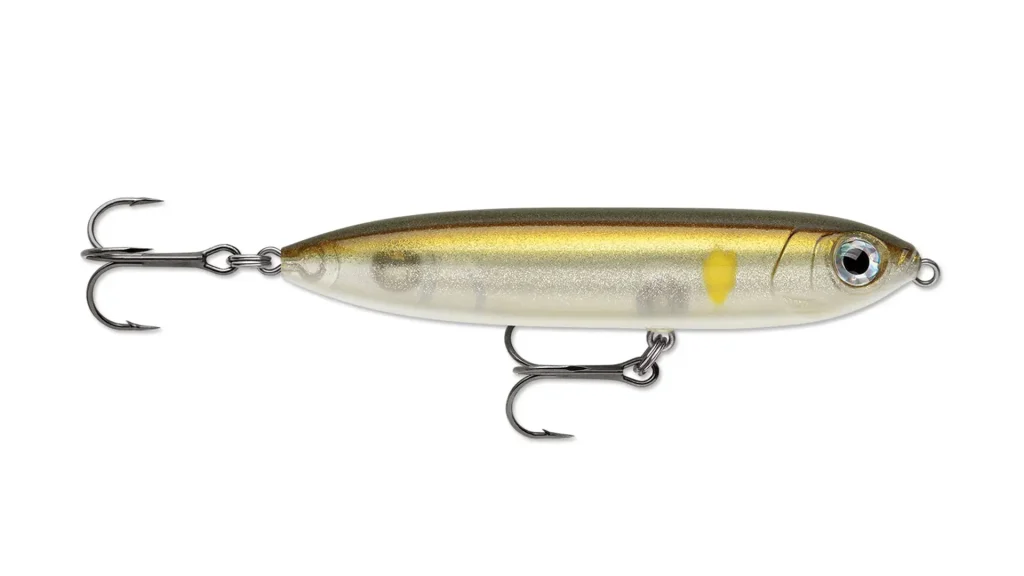
3. The Walking Bait: Covering Water
The third style is a walking bait.
Walking baits are extremely effective topwaters because they allow you to create that side-to-side action across the surface. They can also be a great way to cover water and show the fish something completely different from a popper or prop bait.
Again, pay attention to speed and cadence.
How fast are you walking the bait?
How far are you moving it before stopping?
How aggressively are you working it?
Those little changes can have a big impact on how many fish you catch.
There are days when smallmouth want a bait moving steadily. On other days, changing the rhythm or inserting a pause can turn followers into biters.

4. The Tail-Bait: A Big-Fish Option
The fourth bait is what we call a tail-bait.
While I would put this fourth in terms of overall productivity, that doesn’t mean it should stay home.
In fact, when you’re specifically looking for a really big smallmouth, these larger, more aggressive surface presentations can absolutely be worth throwing.
That’s an important distinction.
There are baits that tend to produce numbers of fish consistently, and then there are presentations that may not generate as many bites but have the potential to appeal to a larger fish.
That’s one reason I want all four styles available.
Cadence Is Just as Important With Topwaters
One of the biggest mistakes anglers make with topwater fishing is assuming that the bait itself is doing all the work.
It isn’t.
You’re controlling the bait.
Just like almost every other technique in fishing, topwater fishing is about cadence, speed and timing.
How long are you going to work the bait?
How fast are you going to move it?
How aggressively are you going to work it?
How long are you going to let it sit?
Those variables matter.
The pause is especially important when you’re fishing a popper. There are times when you can let that bait sit longer than you think you should—and that’s when the fish comes up and eats it.
That’s why you don’t want to be afraid to experiment.
If you’re not getting bites, change something.
Instead of immediately changing lures, change your retrieve first. Slow it down. Speed it up. Work the bait harder. Work it softer. Add a longer pause.
Let the fish tell you what cadence they want that day.
Four Baits Give You Four Different Looks
That’s really the beauty of carrying these four different styles of topwaters.
You’re giving yourself options.
The popper gives you one type of sound and action. The prop bait creates another kind of disturbance. The walking bait has that side-to-side movement, and the tail bait gives you another aggressive surface presentation that can be particularly interesting when you’re hunting for a big fish.
On any given day, one can outperform the others.
From our experience, though, if I’m putting together a topwater box for Canadian smallmouth, I’m going to start with that popper, followed by the prop bait, walking bait and tail bait.
Those four cover an awful lot of situations.
Don’t Leave Home Without Them
When you get those hot, muggy summer days in Canada and the smallmouth are willing to look toward the surface, topwater fishing can be one of the most exciting ways you can possibly catch them.
The visual aspect alone makes it special. You see the fish coming, the water moves, and then suddenly that smallmouth blows up on your bait.
But remember: don’t just throw it and wind it back.
Pay attention to your cadence. Experiment with your speed. Change how aggressively you work the lure, and don’t underestimate the importance of the pause.
Put a popper, prop bait, walking bait and tail bait in your tackle box, and when those Canadian smallmouth start looking up, you’ll have the tools you need to figure out exactly what they want.

